Charles Pictet de Rochemont, 10,000 merino sheep, and the sentence Switzerland still argues about two hundred years later.
This one came from the die. Faces of Vienna works simply: people suggest European countries, a die chooses one, and I go looking for a real person tied to that country and the Congress of Vienna. This time the die landed on Switzerland — and it sent me to a man who spent most of his life farming sheep before he ended up writing the clause Switzerland still leans on today: that it is perpetually neutral.
His name was Charles Pictet de Rochemont, and before I explain what he did in Vienna, I need to explain the world that made him useful there.
Geneva at the end of the eighteenth century was not the Switzerland we know now. It was a tiny, proud Calvinist republic wedged between France and the Swiss cantons, with no real army and no titled nobility. There was exactly one survival strategy available to a state like that: don’t provoke anyone, and make yourself useful to everyone. The Pictets were old Geneva patrician stock — generations in the city councils, generations in foreign military service. Charles’s father was a colonel in Dutch service. This was a family that looked outward, that learned languages and read the English and thought about Europe rather than just their own street. You don’t come out of a household like that as a local notable. You come out of it as someone who can talk to every table at once.
Before he was a diplomat, Pictet was something closer to what we’d now call a knowledge broker. In his twenties he spent nearly a decade in Swiss regiments in French service, but his real interest lay elsewhere. He’d learned German, Italian and English at school, and back in Geneva he co-founded the Bibliothèque britannique, a journal that systematically translated British science, technology and agriculture into French for the rest of the continent. That’s the thread that runs through his whole life: a man standing halfway between worlds, translating one into the other. English into French. Science into practice. And, later, the interests of great powers into the survival of a small state.
Then he went back to Geneva and did something that had nothing to do with diplomacy and everything to do with the instinct behind it. He imported Spanish merino sheep and built a flock that reached roughly 10,000 head by 1806. He trained local shepherds and shared every improvement in breeding and yield with the farmers around him. His wife, Adélaïde-Sara, ran the other half of the enterprise, overseeing the production of luxury shawls and fine wool cloth, trying to turn weaving into winter work for the Geneva countryside. This wasn’t a rich man playing at farming. It was a real transfer of skill and labour — bring in the best of something, then teach it to everyone else. The same reflex that had driven the Bibliothèque britannique. The same reflex that would later reshape a continent’s map, on a much smaller scale than he could have imagined at the time.
Then the idyll ended. Revolution reached Geneva too, and reached it hard. The old city councils were suspended, equality declared, and the old patriciate — the Pictets among them — found themselves on the wrong side of it. In 1794 Pictet was sentenced to a year of house arrest, though he was amnestied and freed after barely three weeks, when the radical government fell.
His brother-in-law, Jean-François de Rochemont, was less fortunate: sentenced to death by the revolutionary tribunals and executed. In 1798, the French Directory annexed Geneva to France outright, and the republic Pictet had known simply stopped existing. He withdrew into his sheep and his fields. It wasn’t surrender. It was patience — the kind that turns out to be invaluable once the great powers finally sit down at a table and need someone who knows how to wait without losing his head.
That table was Vienna, 1814. Napoleon’s victors were redrawing the map of Europe. Metternich, Talleyrand, Alexander I, Castlereagh — great powers, armies, millions of subjects. And off to the side, tiny Switzerland, wanting exactly one thing: for someone to acknowledge it existed, and to let it stay out of the next war. Pictet went to represent it, as plenipotentiary of the Swiss Diet. He had no army to threaten anyone with and no territory to trade. What he had was what he’d spent his whole life practising — languages, contacts, and the ability to translate a small state’s interest into the language of the great ones. His argument wasn’t force. It was that a neutral, inviolable Switzerland served every great power simultaneously, because none of them wanted the Alpine passes falling into a rival’s hands.
It worked. In 1815 the great powers recognised Switzerland’s perpetual neutrality and the inviolability of its territory, and Pictet drafted the document that sealed it. Along the way he also negotiated the modern borders of the canton of Geneva and its entry into the Swiss Confederation.
It wasn’t decoration. It became a foundation of Swiss identity for two centuries — and it’s still a live, contested one. When Switzerland adopted EU sanctions against Russia in 2022, the country argued openly, and not for the first time, about whether the neutrality drafted in Vienna still means anything, or whether it has hardened into a myth people invoke rather than a principle they follow. People are still arguing, in earnest, about a sentence a Geneva sheep farmer helped write two hundred years ago.
Pictet died in 1824 and never saw where it led. A century later, the League of Nations settled in Geneva. Today it’s the European seat of the UN, the WHO, the Red Cross, and dozens of other international bodies — the place the world goes to talk when it can’t talk anywhere else. I don’t think Pictet planned that; nobody could have. But he helped build the one thing without which it couldn’t have happened: credibly neutral ground, recognised by everyone. The instinct that made him translate the English for the French, and bring in sheep to share with his neighbours, became the function of an entire city. Same instinct, same place, two hundred years apart.
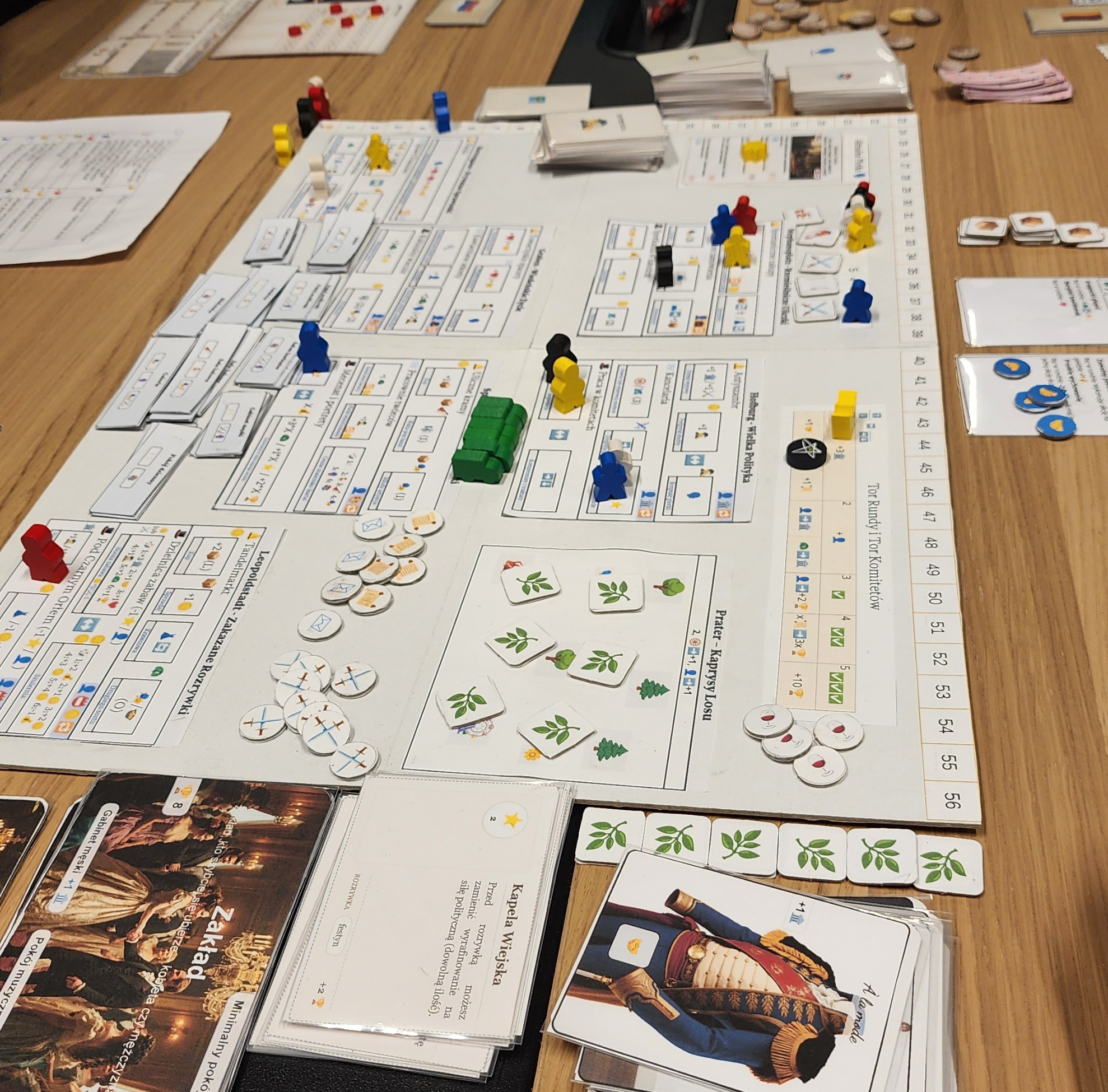
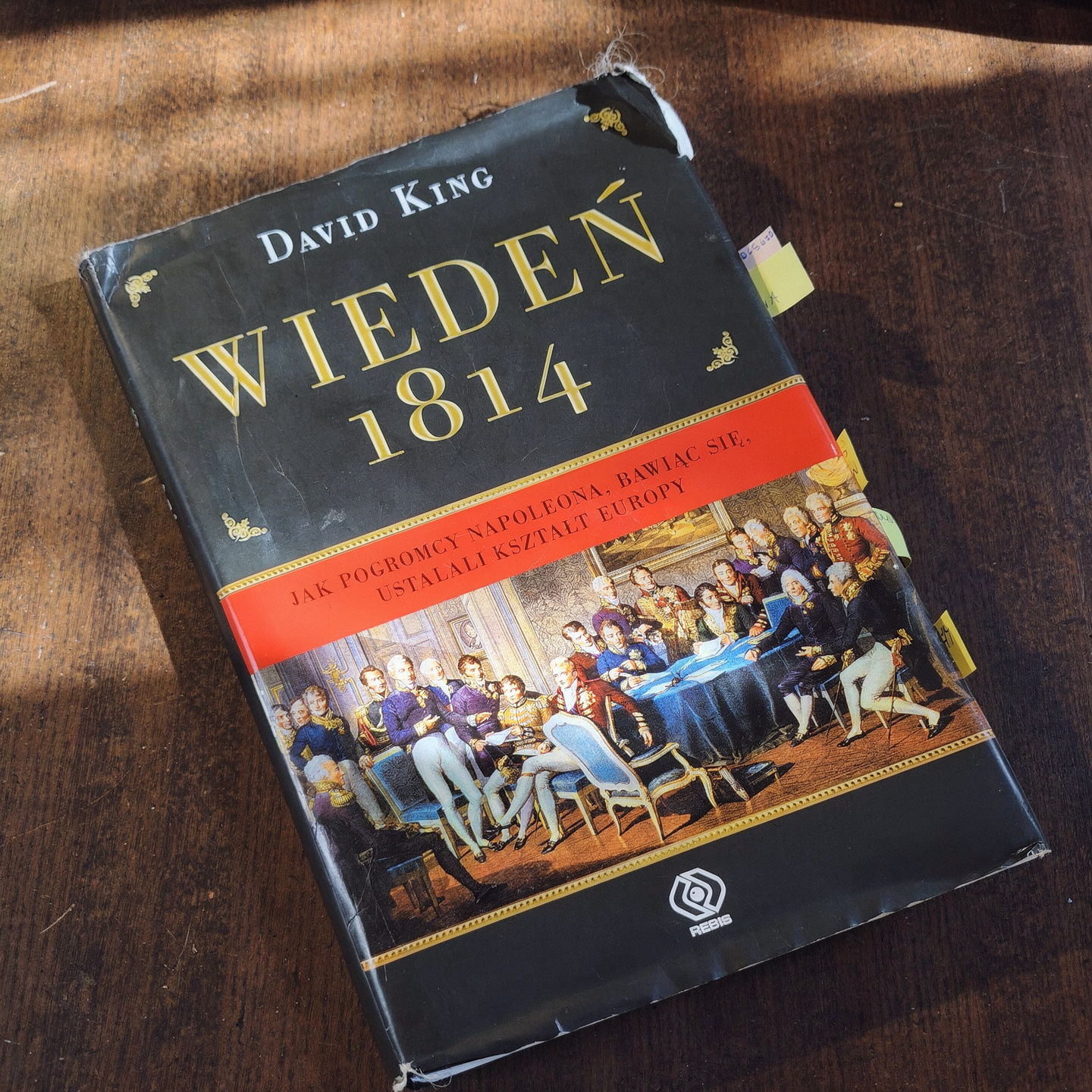
This is part of Faces of Vienna, where a die sends me to a country and I go looking for a real person tangled up with the Congress of Vienna. They feed a board game I’m designing — Vienna 1814: Waltz of Nations — about the Congress seen from the side of salons, gossip, romance and ambition rather than treaties and borders. Pictet had none of the salon glamour, but he’s exactly why I keep digging: real people, real leverage, and the stubborn fact that a small state’s survival was written by someone who knew how to be useful to everyone at once. The game is still in development, and I’m building it in the open.
Which country should the die choose next? You can vote on my socials.