Author: WanderingPine

  • Red flags in board game design

    Red flags in board game design

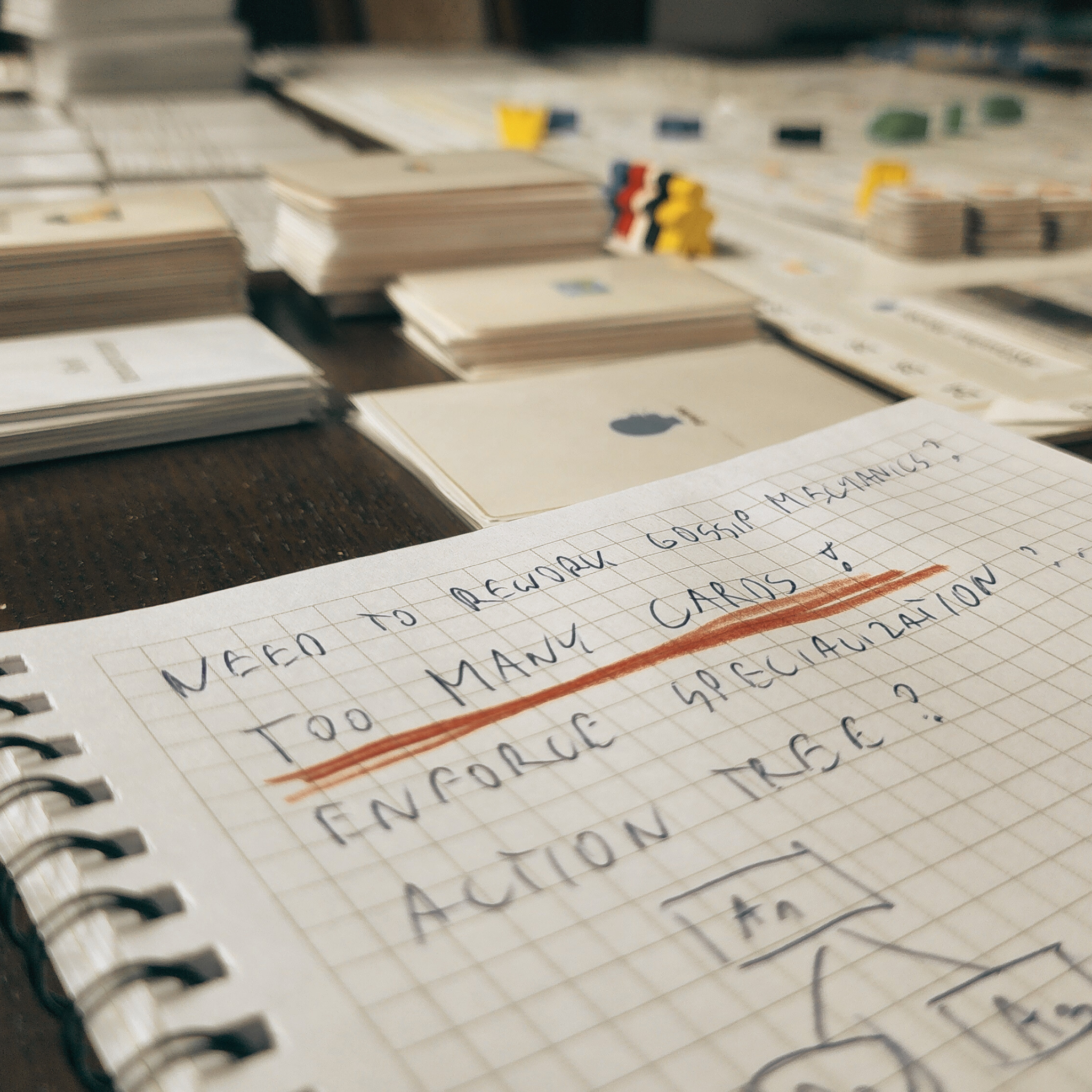
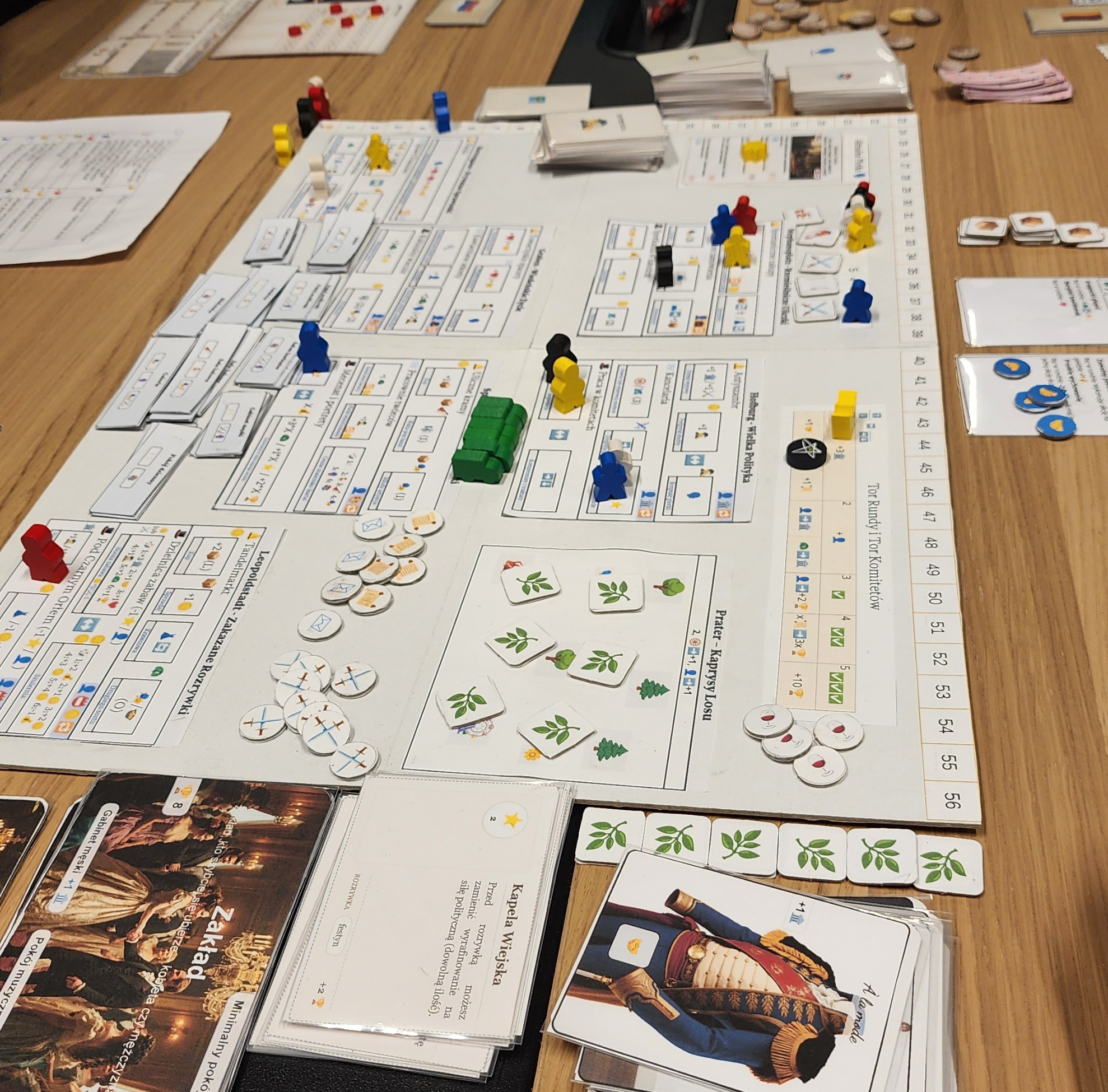
    Some time ago, while wrapping up the manual for the 3rd iteration of “Vienna 1814: The Waltz of Nations”, an unexpected thought appeared — what if my game is too complex?

    Maybe it was the fact that the manual had grown to almost 30 pages. Or that I had just spent two hours self-testing it.

    But how would I even know? My goal was always to design something a bit complex. I enjoy games that take around 3–3.5 hours — that’s my sweet spot, especially for thematic euros.

    During the design process you inevitably encounter problems. Some are easy to adjust. Others signal deeper structural issues. The hardest part is noticing them — especially when you’re emotionally attached to your project.

    These signals are often called red flags.

    Red flags can appear at any stage of development. Not every one of them means your game is broken. Sometimes what looks like a problem is a conscious design choice. And this is fine. But when several appear at once, it’s usually a warning sign.

    Below I list few of the most common ones, ordered from those you might notice earliest in the design process, to those that only surface during playtests:

    Ambitious overdesign.
    If your first game is already an epic universe with planned expansions, your expectations might be outrunning your experience.

    Unclear target player.
    There is no game for everyone. Trying to design for everyone often results in designing for no one.

    Too many mechanics and too much nuance.
    “How many is too many?” is a dangerous question. Adding new mechanics feels productive, but they can accumulate quietly.

    Component and design overload.
    Wanting to include everything often leads to a table overflowing with components — and overwhelmed players.

    Teaching Time Disproportion.
    If explaining the rules takes longer than the gameplay itself, something may be fundamentally off.

    Rule complexity.
    Small modifiers, edge cases, and conditional bonuses quickly increase cognitive load. At some point remembering it all becomes impossible.

    Players are repeatedly confused during playtests.
    If different players stumble in the same places, something hasn’t “clicked” in the system. This require deep insight.

    Reading this, it may all seem obvious. In practice, it isn’t.

    One reason is the sunk cost fallacy. You’ve spent months designing your game, refining mechanics — removing some part of it now feels like admitting that time was wasted.

    Another reason is simply love. When you fall in love with your project, you become blind to its flaws.
    “Not my game. It wouldn’t do that.”

    And sometimes it’s even simpler: it worked in your head.
    Our brains are excellent at connecting ideas — and terrible at simulating friction, real-time decisions, or the simple act of moving a pawn across a crowded board.

    So what can you do?

    Test.
    Self-test. Then test with real people — at a real table.

    Watch the energy. Notice hesitation. Afterward, ask about the most confusing or unnecessarily complex moments.

    And most importantly — be ready to remove things.
    Limit elements. Simplify where possible. Kill your darlings.

    In the upcoming posts, I will look at each of these red flags in more detail — sharing my own experiences and exploring what can actually be done about them.
  • How I discovered the Art of Board Game Design

    How I discovered the Art of Board Game Design

    In my youth, boardgames weren’t just entertainment – they were a doorway to imagination. Years later I rediscovered that same spark in the modern boardgame renaissance. This is the story of how it all began – and how it lead me to the Congress of Vienna.

    In my youth I discovered that boardgames, for me, are more than entertainment, they are an experience. An experience that evokes unique feelings. It excited my imagination in a similar way that books did, but at the same time there was so much more there, thanks to the physical aspect. Components like tokens, cards or dice which you could touch and which represented something real, like a bridge between reality and imagination.
    I recall creating elaborate boards/maps in the end of my notebooks at school, and then trying to figure out how players can interact with whatever I placed there.

    At some point I got into role playing games. With a group of friends we explored dark realms of The Old World and later Forgotten Realms. That was an extraordinary discovery, I realized that imaginary adventures are something that can bond people in a very unique way. Some of the friends I’ve made then last until this day, and it was over 25 years since we started.

    Then life happened. So for many years I was out of the hobby. But the feeling stayed, always deep inside.
    I rediscovered boardgames about 10 years ago and got sunk for real this time. I discovered a plethora of new, unique, evocative, visually stunning games that started to pop up back then. I’ve noticed some of them do something truly unique – they combine mechanics and interweave it with the theme in a unique way that enhances both. That was extraordinary, and I’ve noticed that this is what creates an amazing experience for me.

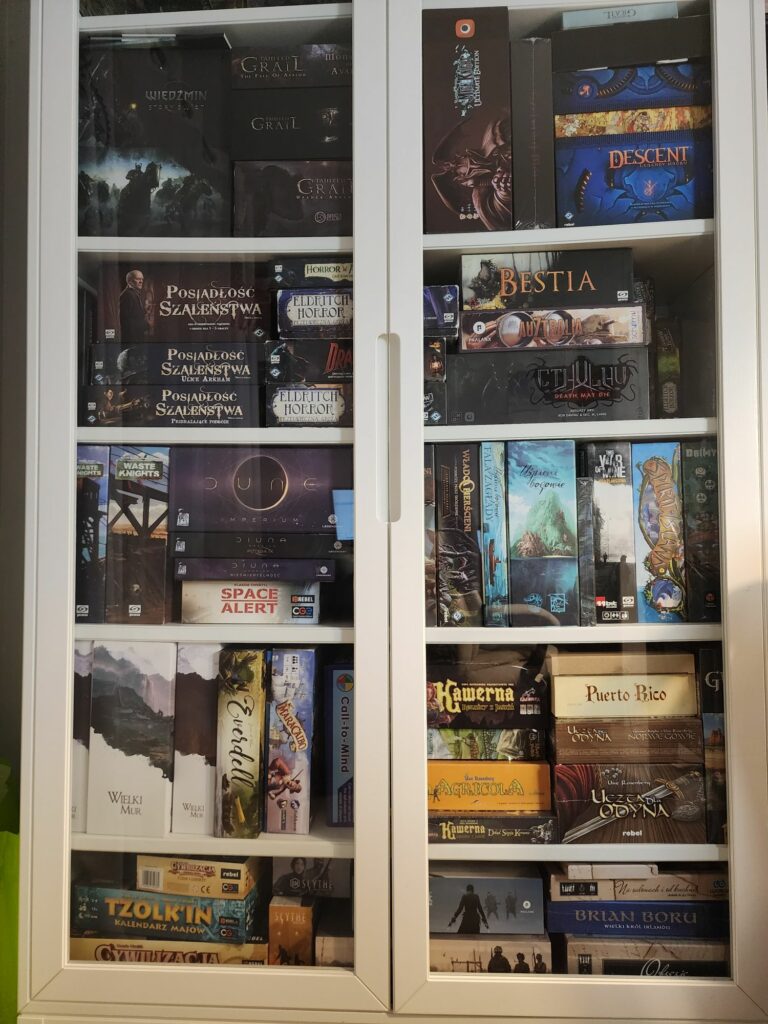
    Some of my favorite boardgames (only a part of my collection).

    Obviously, at some point I started thinking about creating something on my own (but that is common in this hobby). However I needed something truly unique and special that would inspire me. And I knew from the start that if I will create something it needs to allow players to travel into the world of my choice, to ignite their imagination to the levels they might have not experienced before, and definitely I needed to make sure that theme is well integrated into mechanics and vice versa.
    And then I discovered a historical book about the Congress of Vienna. And the rest of my story you can actually read in the previous entry.

    Now I’m fully committed to turning this game into reality.
    It’s a long road, with its share of obstacles ahead, but I’m already too deep into it, so I know there’s no turning back.
    And there are still so many stories to tell.

    So hey – thank you for being here, and for being part of this journey.

  • About summer book and ghosts of the past…

    About summer book and ghosts of the past…

    So this is my first entry. I think that it is a great opportunity, or maybe even a requirement to introduce myself a bit, and tell you about what actually I am trying to achieve here. 

    So my name is Łukasz Sosnowski. My last name comes from a well known tree – sosna which is a pine in English. I wander a lot both in real life, and in my imagination hence wandering pine. Yes, and there is this games part. Well I love board games, for a variety of reasons, which I will probably at some point explain, and currently I am in a process of designing one. So Wandering Pine Games.

    So maybe now a few words about my project.

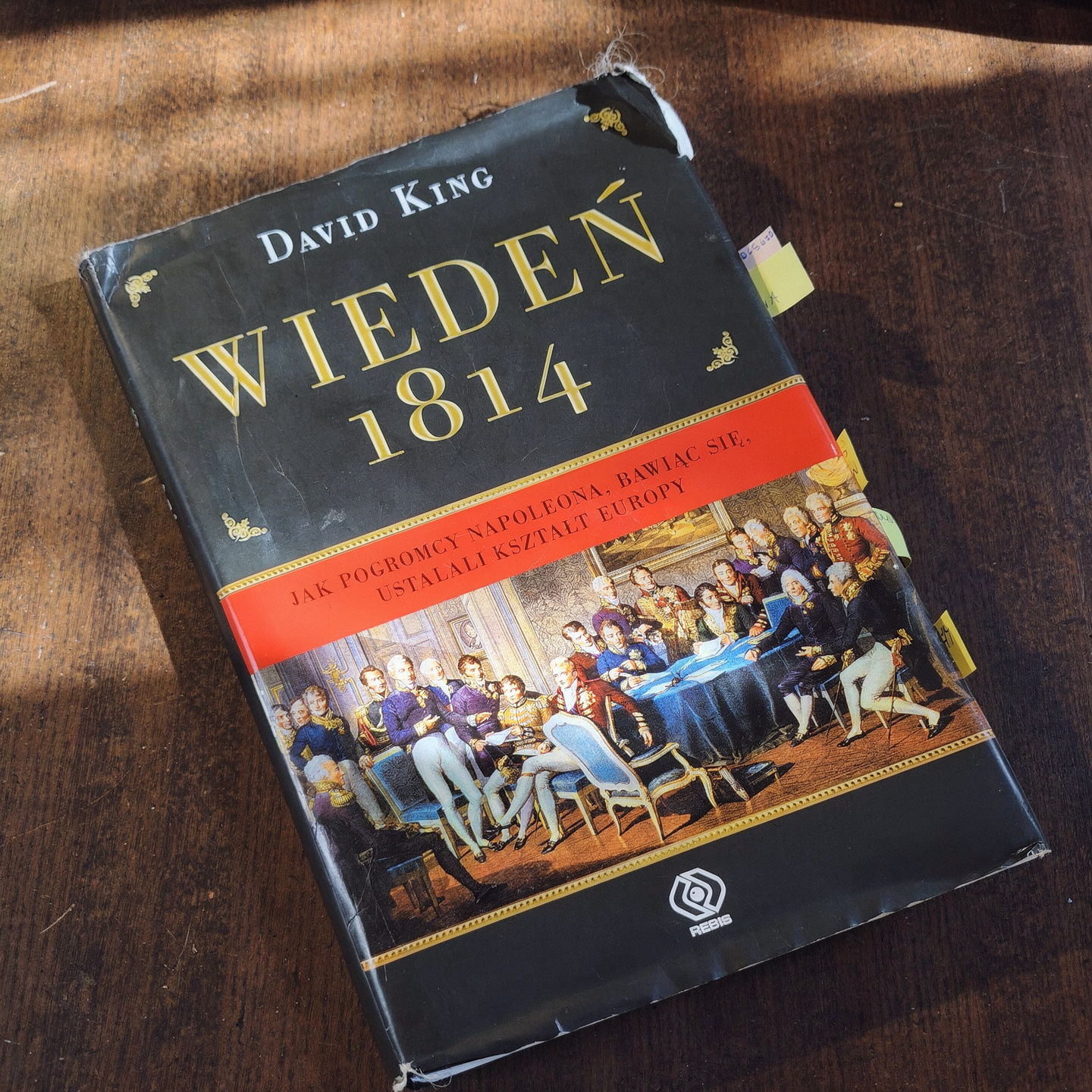
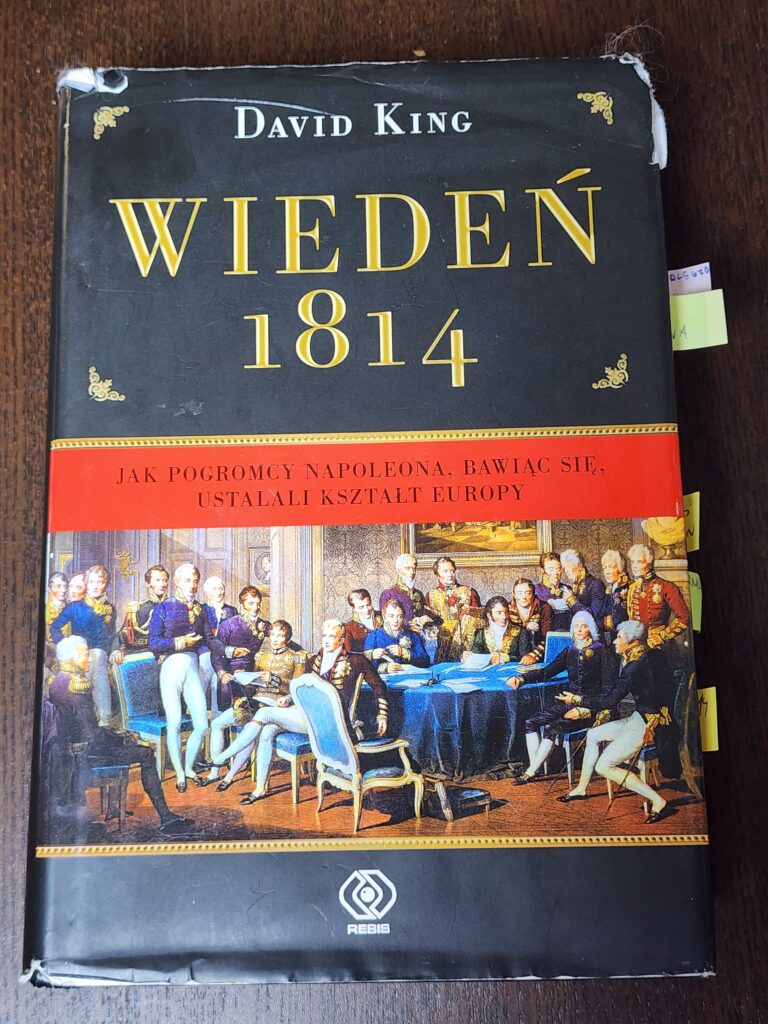
    I believe that it has been seven years since I bought a book “Vienna 1814” by David King, which at the first glance appears to be a historical book about The Congress of Vienna. How I stumbled upon it was actually a complete accident.

    David King's 1814
    Slightly used, but I’ve read it couple of times.

    In Poland it is common that during summer, book tents appear in small seaside towns, where you can buy a book to read on your holidays. I like to visit those, just to browse, cause their collection is very diverse, and prices often more than reasonable. There I found that little gem. I bought it on a whim, cause I found the blurb entertaining. Blurb is what do publishers call the sort of an advert for a book usually on the back of a cover. I found it curious that a history book can have such a captivating blurb. Back then I didn’t like history much. I was never interested in the past, and hardly paid attention in school, so even the feeling of being interested in this particular book was unexpected to me. Especially that the Congress of Vienna always seemed boring to me, like a bunch of people discussing politics – yawn. Anyway I got it, and after a couple of minutes I was reading the prologue. And there was another surprise: the prologue was also entertaining. I could read it like a normal book, not a bunch of dates, and related events (like back then I thought history books look), but an actual story about a man returning back to his place after a night full of entertainments where his butler gave him some important letters that had just arrived. The person was tired and decided to read them in the morning. After a brief sleep he woke up, and tired and sleepy started browsing messages. And then those words “Napoleon is nowhere to be found” suddenly sobered him up.

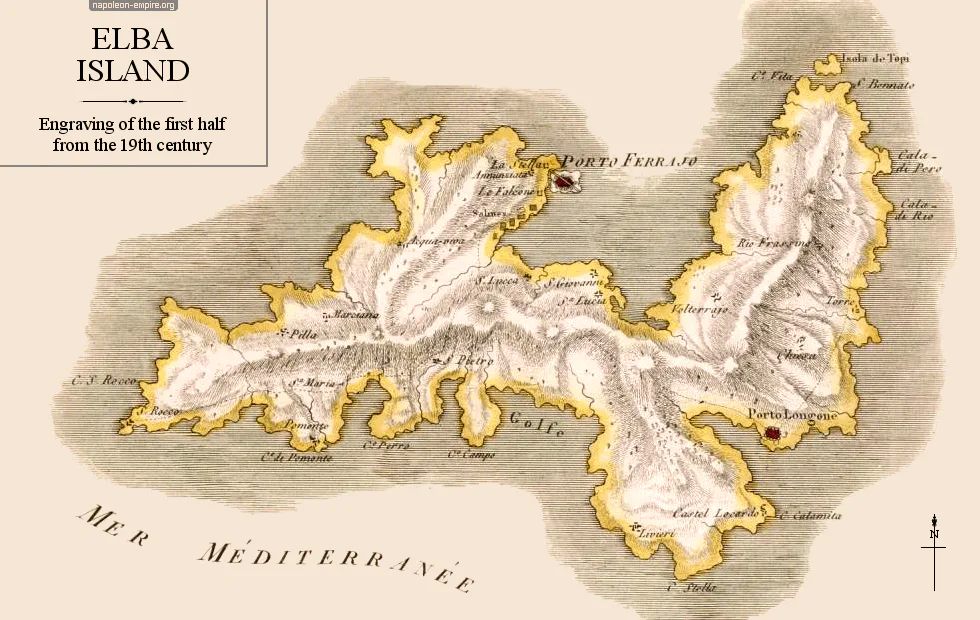
    So, Napoleon deserves its own paragraph. I will tell the whole story maybe a bit later, and probably rather in a short video format, however after over 15 years of war, unrest, and basically chaos in Europe, the self-proclaimed emperor was captured by joined armies of Russia, Austria, Prussia and England. They together decided to put him in an island in the Mediterranean Sea – Elba (near the west coast of northen Italy). It was supposed to be guarded and observed by a garrison of England’s soldiers. 

    map of elba
    Map of Elba. It is very small island, around 224 square kilometers only. Very tiny piece of land. And they’ve lost Napoleon here (in fact he of course escaped on a ship, but that is a different story).

    And this story in a prologue to a history book seemed to me so funny that I literally started laughing out loud. I’ve had my share of parties in the past, so I could imagine how tired the person was in the morning, but being woken up by such an event, where you are literally on a party that already taken at least 4 or 5 months, which started because you’ve captured one guy, and then you’ve read the note that you kinda “lost” him, that had to be devastating, for him. For me it was utterly funny. Especially when I realized that this event actually took place like 200 years before. This realization was eye opening – back then I felt some weird connection to ghosts of the past – they were actually humans like me. Not just barely names (and dates) in history books, but humans with their own passions, emotions, feelings etc.  

    The rest of the book was written in a similar tone, and the author very fluently switched between prose entries, informative facts and even recreated dialogues. I really enjoyed annotations which often explained some unclear details or let the author explain from which source this information was taken. That greatly increased the credibility of the book, which added to my enjoyment. Overall the book showed me this whole event from a perspective I never thought of – more of a social and interpersonal event where politics often happened in the background, between words, behind the curtains. Book showed me a broad range of interesting characters, personalities with fascinating traits, unusual backgrounds, and interesting histories or origins. It was almost like reading about fantasy characters we all know from games and movies, or books, but this time they were real people that walked the earth.

    Back then I was heavily into board games. One of my favorites was always Lewis & Clark which had very nice illustrations and all characters in the game were actually real historical personalities. I greatly enjoyed playing it and imagining myself recreating or even reshaping their actual stories. At some point after finishing the book I had an idea that maybe, just maybe I should try to design a game based on the Congress of Vienna. But from this social and interpersonal perspective I found so amusing. 

    And this is how it started.